Planet 4K - South America
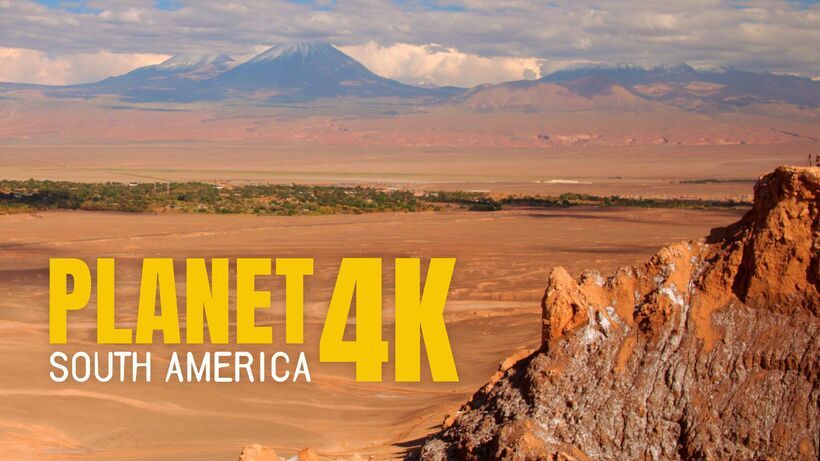
The film takes you on a journey that begins deep in the rainforest and ends in Patagonia with its glaciers and snow-capped volcanoes.
During the earth’s formation, the South American continent evolved as the most autonomous of the continents. The area developed its own unique flora and fauna, jungles with unbelievable biodiversity, climbers and vines. Even today, the number of tropical plants in the region remains a mystery. A trip to South America is a glimpse into the past. The film takes you on a journey that begins deep in the rainforest and ends in Patagonia with its glaciers and snow-capped volcanoes.
See also Planet 4K - South East Asia.

Episodes
-
From Ecuador to Bolivia

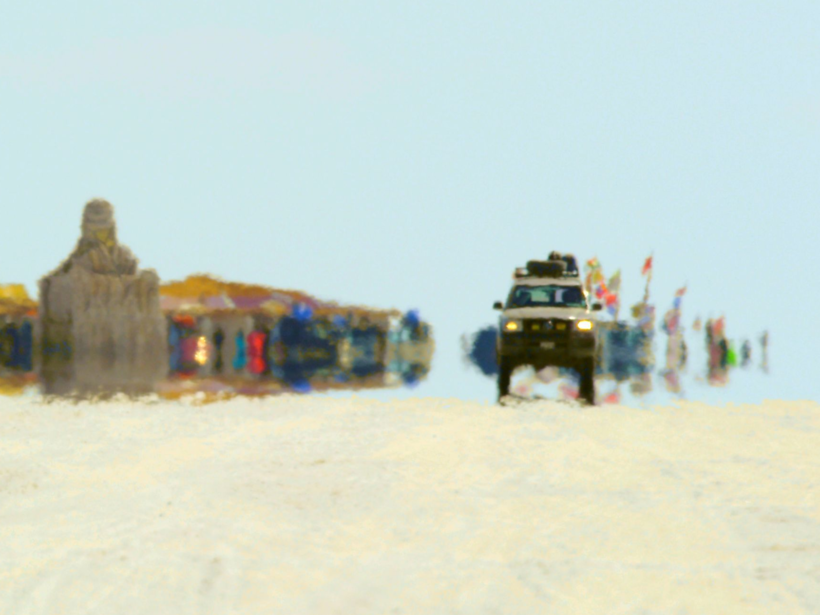
During the formation phase of the Earth, the South American continent developed largely autonomously from the other continents. As a result, a unique flora and fauna could emerge in this region. In particular, the deep primeval forests create an impressive panorama and offer incredible biodiversity. The tropical rainforest is the green lung of our planet. Evergreen trees and countless species of root-climbing plants constantly exchange carbon dioxide for oxygen. This creates the air we need to breathe and the vast clouds of mist that protect the Earth from warming. But only where the rainforest is protected is it safe from destruction. The journey continues to Quito – at 2,850 meters above sea level, it is the highest capital city in the world and is considered the most beautiful city in South America. Founded on the foundations of once magnificent Inca structures, the Spanish conquerors began to build churches, monasteries, and palaces in this high valley. A city grew up here, where today over two million people live. In the 16th century, Spanish conquistadors landed on the Peruvian coast. They fought their way through the depths of the tropical rainforest far into the interior of the Inca Empire. There they took everything that was gold and of value, and the plundered palaces and cities fell into oblivion – as did the long-hidden Inca city of Machu Picchu. At 2,430 meters above sea level lies the well-preserved ruined city. Built by the Incas in the 15th century on a mountain ridge, it housed up to 1,000 people at its peak. Lake Titicaca, at 3,810 meters, is considered the highest navigable lake in the world. It is also regarded as the cradle of the Inca civilization. According to legend, the first Inca descended to Earth from a rock on the Island of the Sun. Today, the Urus, an indigenous people who live on “floating islands,” still inhabit the lake. Only around 2,000 of them remain. In the glorious age of railways, it was once possible to travel from Boston in North America all the way to Patagonia, the southernmost tip of South America. Those days are long gone, and most routes have been abandoned. However, if you want to travel from the former Inca Empire to other parts of the country, you should take a train ride on one of the few remaining routes – time travel included. Once in Bolivia, the tracks come to an end and from there the journey continues only by four-wheel drive. The remnants of the glorious railway era await travelers in Colchani. In the famous train cemetery at almost 3,700 meters above sea level, locomotives and carriages from the 19th century stand abandoned after the collapse of the precious metal mines in the 1940s left them without use. Hundreds of these iron giants patiently wait here for their corrosion, which progresses very slowly thanks to the dryness of the air.
-
From Chile to Patagonia
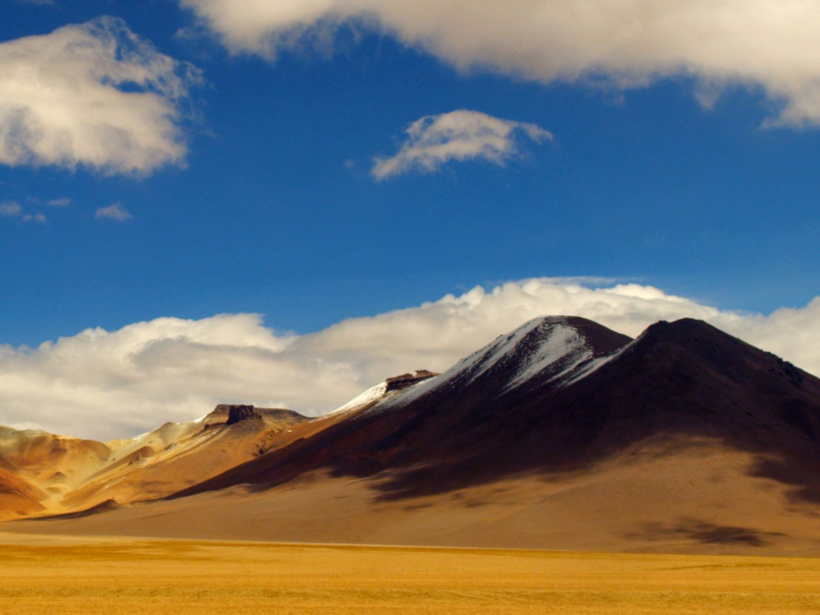
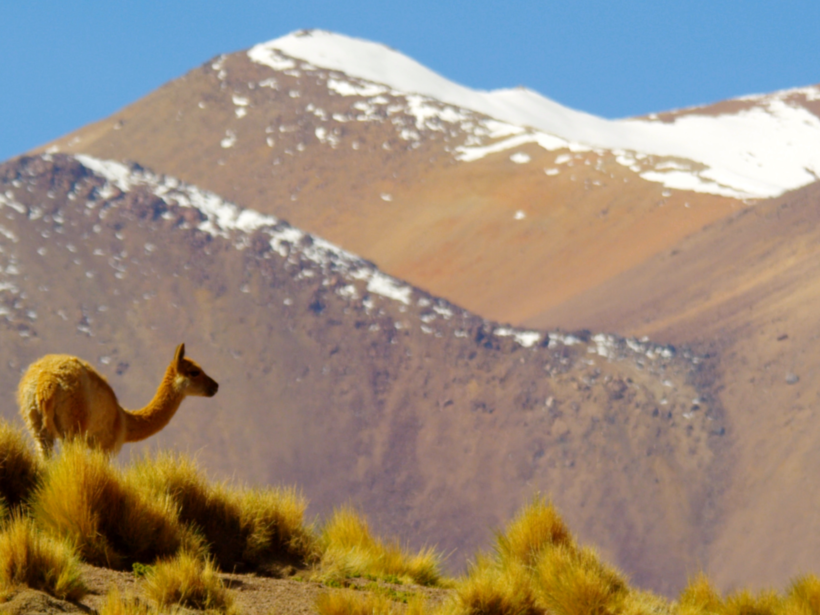
Along the longest mountain range on Earth, our journey takes us through South America. We travel over 2,000 kilometers from the tropical Andes of Ecuador, across Peru, up to the high plateau of Bolivia, and to the foothills of the driest desert on Earth. From there, the journey continues about 5,000 kilometers further south to Patagonia, crossing a country whose scenic diversity is hardly to be surpassed. On the Chilean side of the El Tatio volcano lies an impressive geothermal area with geysers and hot springs. It also belongs to the Altiplano-Puna volcanic region and, at nearly 4,300 meters, is the highest geyser field on Earth. More than 80 geysers, over 30 of them continuously active, shoot huge plumes of steam up to 50 meters into the air. The mineral-rich water of the geysers provides a vital basis for numerous plants and animals on its way into the valleys of the Atacama Desert. This desert is the driest region on Earth outside of the polar areas. There are places here where it has not rained for thousands of years. The conditions are like those otherwise found only on Mars. Much less dry is life 1,500 kilometers further south in Santiago de Chile, a vibrant capital city that is very clean, modern, and exceptionally safe. Visitors can expect colorful and culturally diverse neighborhoods with bars and restaurants, green parks, and urban culture. A must for wine lovers is the Casablanca Valley wine route. Here you will find the country’s most renowned wineries. Along with Maipo and Colchagua, it is one of the three famous and traditional wine-growing regions near Santiago. The further south the journey goes, the cooler and wetter it becomes. About 1,000 kilometers south of Santiago lies the Región de los Lagos, the most scenically diverse region of the country, known for its large turquoise-blue lakes that give it its name. The journey ends in Patagonia. The northern tip of Chile is 5,000 kilometers away, and the temperatures are nearing arctic levels. Those who travel here often want to go even further south, to Tierra del Fuego or even to Antarctica. In the last 150 years, a city of 120,000 inhabitants has developed on the Brunswick Peninsula – a metropolis at the end of the world. Sailors, pioneers, explorers, and adventurers settled here. Torres del Paine National Park is located in southern Patagonia and is one of the most famous and impressive national parks in Chile. The park’s landscape could not be more varied – it consists of mountains, fjords, large lakes, swamps, and grasslands. Large parts of the park are covered by glaciers.
Facts
-
Original TitleSüdamerika 4K
-
Year2019
-
Length2 × 52' (ENG, GER)
-
ResolutionHD, 4K
-
Film byAlexander Sass
-
Produced by