Planet 4K - South East Asia
South East Asia offers mysterious old cultures, steaming cook-shops, exotic plants and animals, and monks deep in prayer.
See also Planet 4K - South America.
Episodes
-
From Myanmar to Cambodia

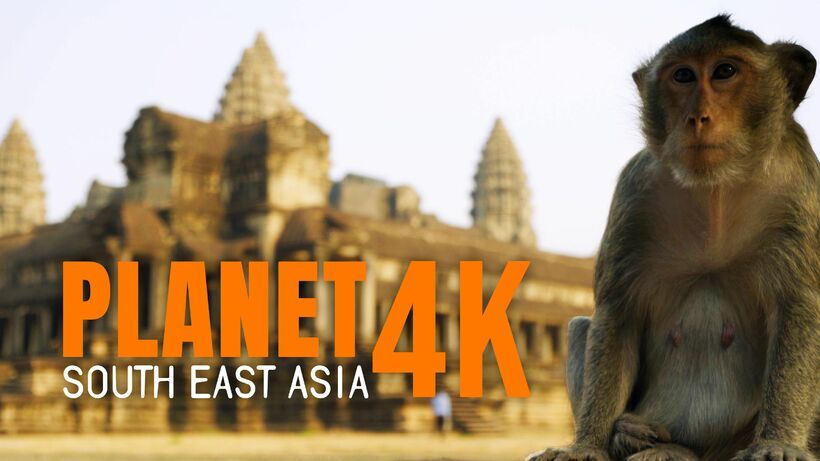
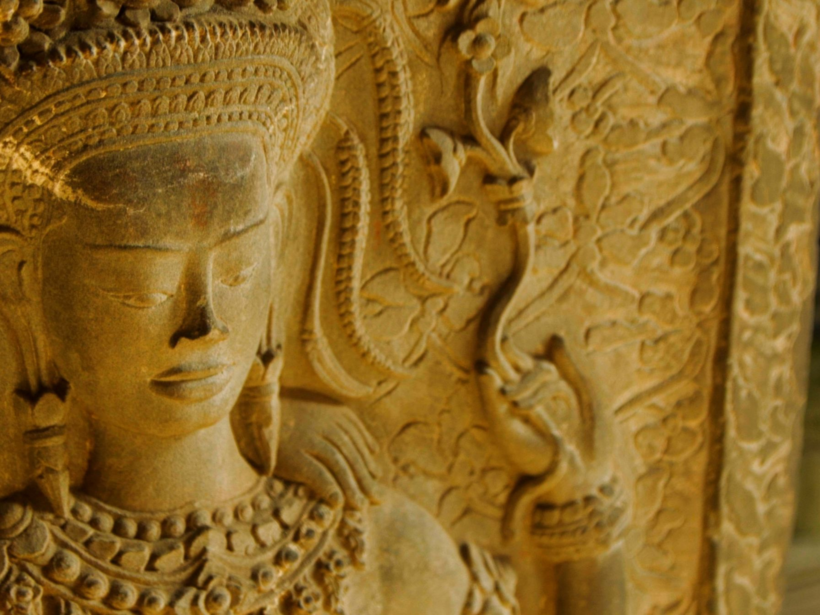
In Southeast Asia, the fascinating journey begins in Myanmar, a country that has increasingly opened up to tourism since the end of the military dictatorship in 2010. The route takes us, among other places, to the famous golden Shwedagon Pagoda. It is the religious center of the country and represents one of the holiest sites in Buddhism. For some pilgrims, visiting it is a lifelong dream. At night, when the lights are switched on, the pagoda shines in a golden glow. It is said that more gold was used for the Shwedagon Pagoda than can be found in Fort Knox or the Bank of England. The largest diamond at its tip is said to be an astonishing 76 carats. Cambodia, in turn, is a country where rainforests with paradisiacal waterfalls meet the mysterious temples of Angkor. Angkor is perhaps the most famous region of the country, which from the 9th to the 15th century was the center of the historic Khmer kingdom of Kambuja. The architecture of the Khmer was unique and can still be admired today in the form of extraordinary temple complexes – above all Angkor Wat, the largest temple complex in the world. The cradle of Angkor culture is located on the sacred mountain Phnom Kulen. The first capital of the Angkor civilization was rediscovered here only in this century. To this day, only small parts have been excavated, and various organizations are working with the help of global donations to excavate and preserve them. We visit the excavations, where archaeologist Dr. Jean-Baptiste Chevance explains the project to us.
-
Vietnam – From Saigon to Ha Long Bay
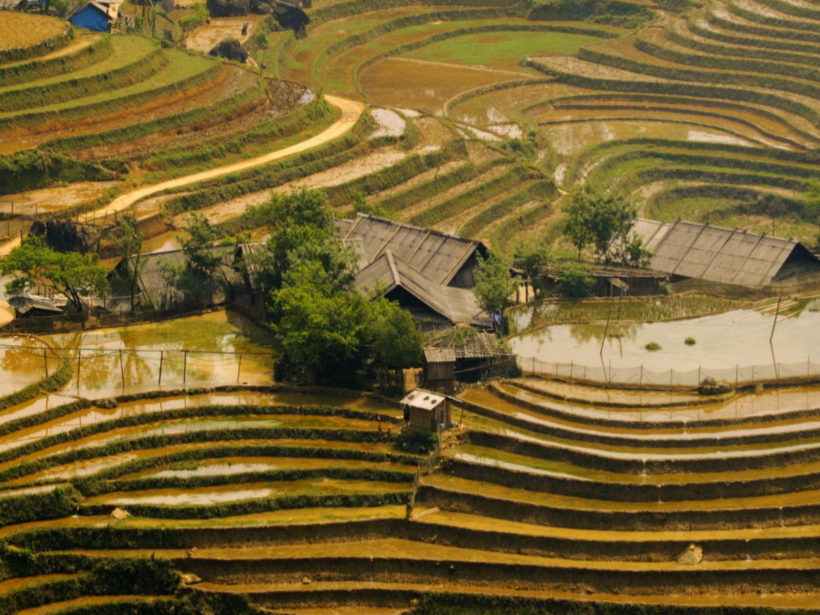
The second part of the journey leads through Vietnam – an ancient country with a turbulent history, breathtaking natural spectacles, and a colorful mix of tradition and modernity. Here, in the country’s major metropolises, life feels far more modern than in the former strongholds of the Angkor Wat civilization – yet no less exotic and exciting. Ho Chi Minh City, still called Saigon by many, was once the capital of the former independent country of South Vietnam. Today, it is Vietnam’s largest city and has been developing at a tremendous pace for decades. Every month, new hotels, office buildings, bars, and restaurants spring up. Tourists from all over the world explore the vibrant nightlife, alongside locals, while during the day business dominates. Far more traditional and relaxed is life in the nearby Mekong Delta. Here, the Mekong divides into thousands of small tributaries connected by countless canals before flowing into the South China Sea. This area stretches over more than 39,000 square kilometers. The endless waterscape means that the inhabitants of the delta live, work, and travel primarily on the water. Every tiny hut here has access to a waterway, while a connection to a passable road is often a rarity. Northern Vietnam, on the other hand, is a paradise for hikers. Nowhere else does one encounter Vietnam and its people in such an original and authentic way. Multi-day treks through picturesque valleys, along rice terraces, to hidden suspension bridges and waterfalls are highly recommended. The city of Hanoi has a turbulent history dating back to the 11th century and is one of the oldest still-existing capitals in Southeast Asia. Over the centuries, Hanoi has had to endure many sieges. Chinese, French, and Japanese conquerors as well as American bombings during the Vietnam War have all left their mark. Yet, fortunately, the residents of Hanoi have preserved much of their culture and way of life. The final leg of the Southeast Asia journey takes us by junk boat through Halong Bay. For many, the bay is the natural jewel of Vietnam and one of the greatest and most fascinating natural wonders on Earth. Nearly 2,000 mostly uninhabited islands and karst formations rise hundreds of meters from the water. The Vietnamese call this unique coastal landscape the “Bay of the Descending Dragon.” According to legend, a dragon once lived in the mountains near the sea. As it ran toward the water, its tail is said to have carved deep furrows into the land, which were then flooded by the sea when the dragon plunged into the water. And as one looks around in the soft evening light, it is easy to imagine still seeing the dragon diving between the rocks into the sea.
Facts
-
Original TitleSüdostasien 4K
-
Year2019
-
Length2 × 52' (ENG, GER)
-
ResolutionHD, 4K
-
Produced by